An auditorium has to be ready for a lot of different uses. One day it may host a company presentation, the next a panel discussion, and the next an event that calls for a completely different look and feel.
That flexibility was an important part of Mercury Sound & Lighting’s work in Blue Cross Blue Shield of Michigan’s Whitmer Auditorium in Detroit.
For this auditorium AV integration project, Mercury upgraded the lighting system and controls with a focus on giving the space more capabilities while still keeping everyday operation manageable for the people using it. The project included new performance lighting in several areas of the auditorium, updated lighting controls, power management, system programming, installation, commissioning, and staff training.
Giving the Auditorium More Lighting Flexibility
One of the biggest parts of the project was expanding what the auditorium could do with lighting.
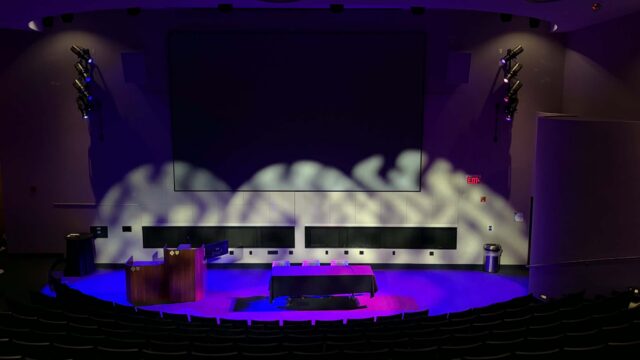
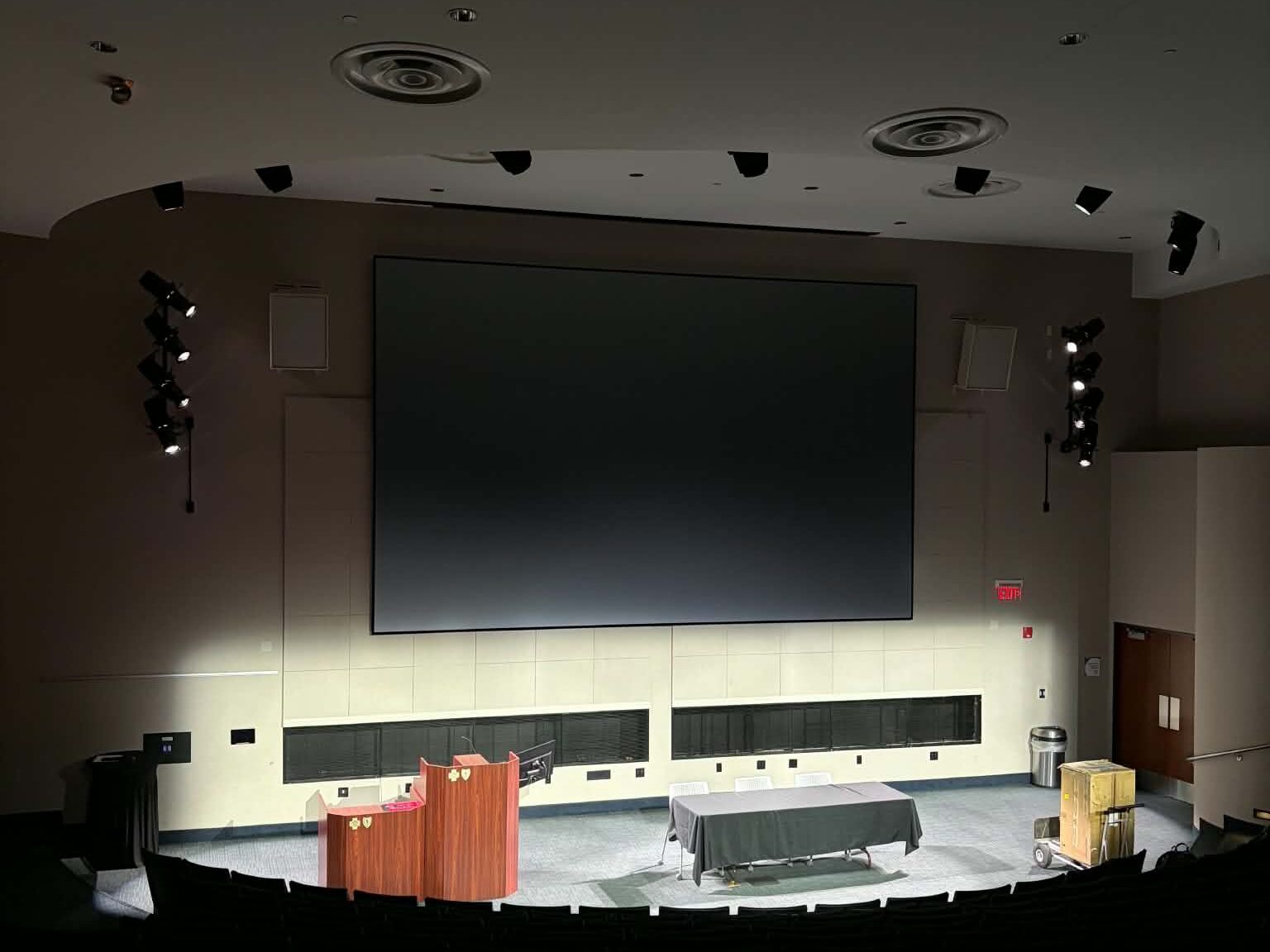
Mercury added new fixtures in gallery positions, above the front of the stage, and along the sides and back of the performance area. Together, these positions give the room more options for illuminating presenters, creating depth on stage, and changing the overall look depending on how the auditorium is being used.
Rather than relying on one general lighting look for every program, the upgraded system allows different areas of the stage to be controlled and shaped more intentionally.
For the people sitting in the audience, that can mean presenters are easier to see and the stage feels more polished. For the team operating the room, it means having more flexibility when moving between meetings, presentations, performances, and other events.
Auditorium AV Integration Should Still Be Easy to Use
Adding more technology is only helpful if people can actually use it.
That is why the control side of this project was just as important as the lighting fixtures themselves.
Mercury incorporated a dedicated lighting console, networked lighting control, wall-mounted scene controls, and integration with the auditorium’s existing Crestron environment. The system was designed so preset lighting looks could be triggered through the room’s broader AV controls, helping simplify common uses of the space.
In everyday terms, the goal was to give the auditorium more sophisticated lighting without making every user operate a complicated production console just to use the room.
For events that require more hands-on control, the dedicated lighting console provides additional flexibility. For more routine uses, preset scenes help make the system much more approachable.
Updating What Happens Behind the Scenes
Some of the most important parts of an AV integration project are the things most people will never see.
Along with the visible lighting upgrades, Mercury’s scope included updated dimming and relay control for the auditorium’s lighting system. These improvements help manage how power is delivered to both traditional and intelligent lighting fixtures and allow the new system to respond properly to the room’s controls.
The project also required coordination with the building’s AV network and electrical work being completed outside Mercury’s scope. Mercury provided the control-side connections, system configuration, testing, and commissioning needed to bring the pieces together.
That coordination matters on an auditorium AV integration project because the final user experience depends on multiple systems working together, even when those systems are being handled by different teams.
Designing for the People Who Use the Room
A finished AV system should not feel like something only a technician knows how to operate.
Mercury included training for BCBSM staff covering the new architectural controls, lighting console, and fixtures. That training helps the people responsible for the auditorium understand not just what the system can do, but how to use those capabilities in real situations.
This is an important part of professional AV installation. The project is not finished simply because the equipment has been mounted and connected. The people using the space need to feel comfortable with it too.
A More Adaptable Auditorium
The Whitmer Auditorium project was ultimately about giving Blue Cross Blue Shield of Michigan more ways to use an important space.
The upgraded lighting positions provide greater control over how the stage is illuminated. The new control system brings those capabilities together in a way that supports both simple everyday operation and more advanced event needs. Behind the scenes, updated dimming, relays, networking, and programming help the entire system work as one.
That balance is what thoughtful auditorium AV integration should accomplish. The technology can be sophisticated, but the experience for the person using it should feel straightforward.
Planning an auditorium upgrade or another professional AV installation? Start Your Project with Mercury Sound & Lighting to create a system built around how your space actually needs to function.
Follow our Instagram and Facebook to stay up to date on all things Mercury!