
Hybrid events sound simple in theory.
Just livestream the event, right?
In reality, producing a successful hybrid event takes a lot more planning than most people expect.
The challenge is that you’re not just creating one event anymore — you’re creating two experiences at the same time. One for the people in the room and one for the audience watching remotely.
And both audiences need to feel engaged.
That’s where hybrid event production can either really shine… or completely fall apart.
The Biggest Problem With Most Hybrid Events
A lot of hybrid events treat virtual attendees like passive viewers instead of actual participants.
You’ve probably seen it before:
- One static camera angle
- Hard-to-hear audio
- Tiny presentation slides
- Awkward transitions
- Remote viewers feeling disconnected from what’s happening in the room
The result is an experience that feels more like surveillance footage than a professionally produced event.
The best hybrid events are intentionally designed for both audiences from the very beginning.
Audio Is More Important Than Most People Realize
If there’s one thing that can ruin a hybrid event quickly, it’s bad audio.
People will tolerate video that isn’t perfect. They won’t tolerate struggling to hear the presenter for an hour.
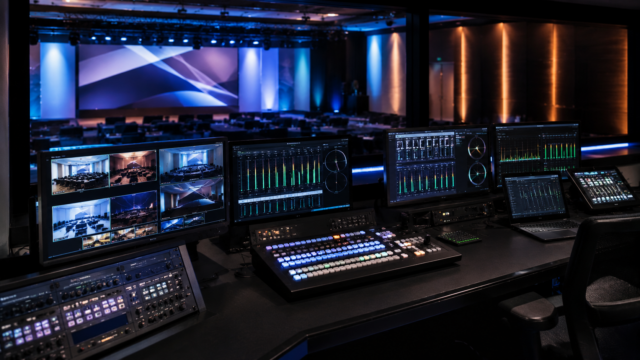
That’s why professional hybrid event production focuses heavily on audio quality:
- Proper microphones
- Clean audio mixing
- Echo prevention
- Separate audio feeds for livestream viewers
- Backup systems for reliability
Good audio keeps remote audiences engaged. Poor audio loses them almost immediately.
Hybrid Events Need More Than One Camera
One locked-off camera at the back of the room rarely creates an engaging virtual experience.
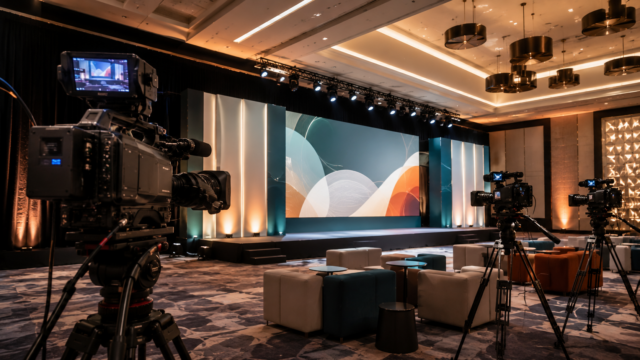
Multiple camera angles help remote viewers feel connected to the energy of the event. Close-ups, audience reactions, presentation integration, and live switching all make the experience feel far more polished and intentional.
It’s the difference between “watching” an event and actually feeling part of it.
Reliable Internet Isn’t Optional
This is one of the least exciting parts of hybrid production — but also one of the most important.
Even the best production setup can fail if the internet connection isn’t stable.
That’s why professional production teams plan for:
- Dedicated internet bandwidth
- Hardwired connections
- Backup internet solutions
- Stream redundancy
- Live monitoring throughout the event
Because when hundreds or thousands of people are watching remotely, reliability matters.
Hybrid Events Work Best When Everything Feels Seamless
The audience should never be thinking about the technology behind the event.
They should simply feel connected, engaged, and able to focus on the experience itself.
That takes coordination between audio, video, lighting, livestreaming, graphics, staging, and show flow — all working together behind the scenes.
At Mercury, we handle hybrid event production end-to-end so clients can focus on the event itself instead of worrying about the technical side of it.
Because when hybrid events are done right, they don’t feel complicated. They just feel seamless.
Planning a hybrid event? Mercury can handle production end-to-end.
Follow us on Instagram and Facebook to stay up to date on all things Mercury!
